After taking a nutritional science class and doing research on my own, I've been eating as healthy and as truly naturally as possible since I was 17. Of course, once in a while I will stray, but the thoughts of certain food additives have always restrained me from going too far. These are the reasons why I rarely eat out and if I do eat out, I like to order foods that seem the least "processed". Basically, I want to know what I'm putting into my body and that, among many other reasons, is why I enjoy cooking and baking my own food. I was discussing this with one of my Romanian friends, who, to my great surprise, had no idea about the horrible additives and ingredients that are either disgusting to think about or terrible for your health. So, in case there are others out there who also are unaware of these grotesque ingredients, I'll list the top 9 ingredients that should be avoided and will make you think twice before buying that over-processed chocolate Swiss roll.
9. Bone Char
Vegans don't eat sugar, or at least, refined, white sugar. Why? Because sugar, in its natural cane form is brown. There is molasses (a dark liquid) in the sugar and it is usually extracted and sold as a separate product, at least in the United States. I haven't found molasses in France or Germany. Sugar, at least in the U.S., comes in varying colors: molasses sugar (with all the molasses left in the sugar = completely unrefined), dark brown sugar (most of the molasses left in the sugar), brown/golden brown sugar (some of the molasses left in it), light brown sugar (most of the molasses extracted from sugar, and white, refined sugar (no molasses left in sugar)

But how is the sugar so snow white? Well, some companies use bone char to filter their sugar. Bone char generally comes from cow bones (that have died from "natural causes", which may or may not include disease), usually from Afghanistan, Pakistan, or India, that are sun-bleached and have had their gelatin extracted. These bones are then super-heated and used to process/filter sugar. It's not as disgusting or disturbing as some other other food ingredients/processing facts and the fact that not *all* sugar refining is done with bone char (last time I checked the numbers it was about 25%... so you have a 75% chance that your sugar isn't bone char infused). But still... food for thought. This is why I prefer brown sugar.
8. Shellac
Shellac is commonly used to clean wooden furniture and gives that oak table it's beautiful, shiny, luster. Not only is it used for furniture, but sometimes, even AK47s and guitars are polished with shellac. Can you think of any foods that have a strange polished look?
Jellybeans and other candies with shiny luster usually contain shellac. Where does shellac come from? This is pretty gross to think about, so stop reading if you just ate.
That's right, shellac is produced from Kerria lacca insect excretions.
Kerria lacca uses its excretions to stick to the trees it lives on in the forests of Thailand. Usually in the process of making shellac, the bugs are processed along with their excretions... which means you're most likely eating those nasty buggers whenever you take a bite of that shiny morsel of sugar.
7. Carmine
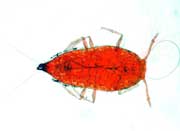
Also known as Food Coloring E120, Crimson Lake, Natural Red 4, Cochineal, or C.I. 75470, this food fact should be known by most people already... basically, this "natural" food coloring is made up of a bunch of these:
Yeah, that's right. Carmine is mushed up cochineal insects = red beetles. They're crushed and boiled/heated to high temperatures to make sure any eggs are dead, then the mixture is later dried. Since many people already know about carmine, anything that shouldn't be red but is red and has a label "natural color" on it, means you're probably eating these mashed up beetles. I prefer natural ways of coloring food (red, blue, purple, or whatever else), which DON'T involve bugs. For instance, if you REALLY HAVE TO dye something red, use beet juice!
It's healthier, not disgusting to think about at all, and it will dye anything it touches red! I first got this idea (though it's probably not just me who does it) from thinking of a famous beet soup, borscht! Большое спасибо to the Russian babushkas for this =) Now I can have colorful red dyes without using bugs.
6. Carrageenan
Carrageenan is derived from seaweed and is used as a thickener in a variety of foods, ranging from cream to processed meats.
This food additive has been used in experiments involving animals, which have resulted in gastrointestinal cancer among the tested lab animals. In humans, it has been linked to inflammation and possible gastrointestinal problems. In fact, though the evidence hasn't been 100% proven to be true, the health risks are there and thus, most countries' food regulators (European Commission, FDA, etc.) restricts the percent of carrageenan in foods to 5%. Still... if you eat something with carrageenan every single day... that adds up. So I just avoid it altogether.
5. Bacteriophages
Bacteriophages are added to sausages and other processed meats. What are bacteriophages? Viruses.
Usually more than one type of virus is used, but the number is usually around 6 different types of viruses. Some people actually do get sick from these ingested viruses... but the number that actually do get infected and die are very "insignificant" that nothing is being done about it. Why are viruses added to processed meats? To extend the meats' shelf life, of course. Meats are usually in danger of microbial (bacterial) invasion and thus, tend to go bad pretty quickly. Processed meats are usually things like sausages, thinly sliced sandwich/lunch meats and the like, and manufacturers want their meats to last longer. Would you really buy that sliced, processed chicken breast if it would only last a couple days before bacterial molds formed on it? Probably not. So viruses are sprayed on so that the they attack the bacteria.

"Typical phages have hollow heads that store their viral DNA and tunnel tails with tips that bind to specific molecules on the surface of their target bacteria. The viral DNA is injected through the tail into the host cell, where it directs the production of progeny phages."
That's right, a virus vs. bacteria war takes place on that piece of sliced meat. More like: Bring home the viral-microbial war on a plate!
4. Natural Flavor
Natural flavor might not sound as bad as eating viruses, but sorry... it's much, MUCH worse. How much worse... well... basically anything that's not man-made is considered "natural" and can be included in this vast, ambiguous category of "natural flavor". What do I mean? I mean that rabbit semen or horse urine can be labeled as "natural flavors". I haven't discovered the aforementioned actually being used, but... I have heard nearly disgusting instances. For instance, castoreum is often used in processed, raspberry-flavored foods, certain types of chewing gum, and cigarettes. What is castoreum? Anal excretions from beavers. That's right, beaver butt juice, in layman's terms.

Not grotesque enough for you? Well, another ingredient you might have eaten today is feces. That's right, poop. A component found in fecal matter (poop) called skatole (comes from Greek "skat" = dung) is commonly used and labeled as "natural flavor" or "natural flavoring(s)" in strawberry ice cream or other processed strawberry-flavored foods. Strawberry ice cream with the hint of dung, yum! I wonder who thought this was a good idea? Hey, and if the label also says "carmine" or "natural coloring" on it as well, you're eating a bunch of mashed up red beetles as well! Double whammy!
Other natural flavors that are commonly used? Lard from animals are often used for deep fried foods. According to the book Fast Food Nation, "Beef is the probable source, although other meats cannot be ruled out. In France, for example, fries are sometimes cooked in duck fat or horse tallow." Horse. Tallow.
Poor French horses...
3. Sodium Nitrite/Nitrate
Also known as nitrosamines, and in Europe as E251, it is a common ingredient for smoke bombs, pyrotechnics (fireworks and the like), fertilizers, solid rocket propellant, glass/pottery enamels, and... yes, as an ingredient in food. It is most commonly used in sliced ham, certain processed bacon, and other meats. Why is it so bad? Hm... think about what it's used for other than lengthening processed meat shelf life... yeah, some research (especially cancer research) points out that sodium nitrite/nitrates are carcinogenic (can cause cancer when consumed over longer periods of time/higher amounts).
2. Partially Hydrogenated/Hydrogenated Oils
EVERYONE should know this by now. New York City banned trans fats from restaurants in 2006 and many other cities have since followed suit. Partially hydrogenated/hydrogenated oils are trans fats. What are trans fats? They're unnatural, man made fats that are unsaturated (polyunsaturated or monounsaturated) but have a trans-isomer added to stabilize the fat. You don't need to remember anything from chemistry class to know that it's bad for you, however. Not just the fact that it's a man-made fat, but the health risks are lengthy and serious. If diabetes, heart disease, liver diseases, cancer, Alzheimer's disease, obesity, infertility in women, and cellulite aren't enough to turn you away... then eat away! Because of it's unnatural state, we can't digest trans fats and they essentially stay in your body forever!!! 1. Monosodium Glutamate
MSG... this, in my opinion, is the worst since it's also the sneakiest ingredient of them all. Other names include, but are not limited to, artificial and natural flavoring, Flavoring E621, hydrolyzed protein, glutamic acid, natrium glutamate, glutamate, aspartame, textured protein, sodium caseinate, hydrolyzed corn gluten, maltodextrin, malt extract, soy protein isolate, barley malt, soy sauce extract, whey protein concentrate, any modified enzyme, protease enzymes, nutritional yeast, and processed yeast. Why is MSG bad? Hm... so many reasons why... luckily, I've actually developed a non-lethal allergy to it, so I have to avoid it (otherwise I get headaches, bloating, vomiting, among other not-so-great reactions). Monosodium glutamate and any other derived, manufactured glutamate, are "excitotoxins". Excitotoxins are exactly what they sound like: they "excite" cells to the point where they kill the cells, thus the ending "toxins". Essentially, you're eating poison if you're eating this. There are glutamate receptors in our body and glutamate/glutamic acids occur naturally in our bodies and in other plants like seaweed or mushrooms. Monosodium glutamate and other processed glutamates are dangerous because it's a very concentrated dose and thus, these things affect everything from our brains to our pancreases.

Here's a clip that explains further how MSG affects us:
Today's Random Quiz:
You Are Kids Playing
|
 You are a free spirited soul. More than anything else, you are often just happy to be alive.
You are always laid back and cheerful. You enjoy whatever happens to come your way.
You are spontaneous and zany. You're the kind of adult who still runs through the sprinklers.
You don't take life too seriously. You try to have fun at all times, even when you're working.
|